Reclaim Your Privacy: How Ford SUV Owners Are Disabling Telematics to Go Off the Grid
This article provides an in-depth exploration of Telematics, covering foundational concepts, practical applications, and engineering insights.
In an era dominated by smart technology, your vehicle might be sharing more about you than you realize. Modern automobile manufacturers, including Ford, equip virtually every new SUV with built-in cellular modems designed to monitor driving habits, location data, and vehicle health. While these features offer conveniences like remote start and over-the-air updates, a growing movement of privacy-conscious drivers is choosing to cut the digital cord entirely.
Understanding Modern Vehicle Telematics
At the heart of this continuous data collection is vehicle telematics—a technology that merges telecommunications and informatics to transmit real-time driver metrics directly back to carmakers. Automotive telematics systems track where you travel, your speed, braking patterns, and even time of day spent on the road.
While manufacturers frame this connectivity as a safety and maintenance benefit, many owners are raising valid privacy concerns. Reports have revealed that connected vehicle data can sometimes be shared with third parties, including insurance analytics companies, which could potentially impact insurance rates based on driving behavior.
Why Drivers Are Choosing to Unplug
For many Ford owners, the idea of non-stop corporate surveillance feels like an unnecessary trade-off. Whether taking daily commutes or heading into the wilderness for an off-road adventure, drivers want the peace of mind that comes with true independence from cloud tracking.
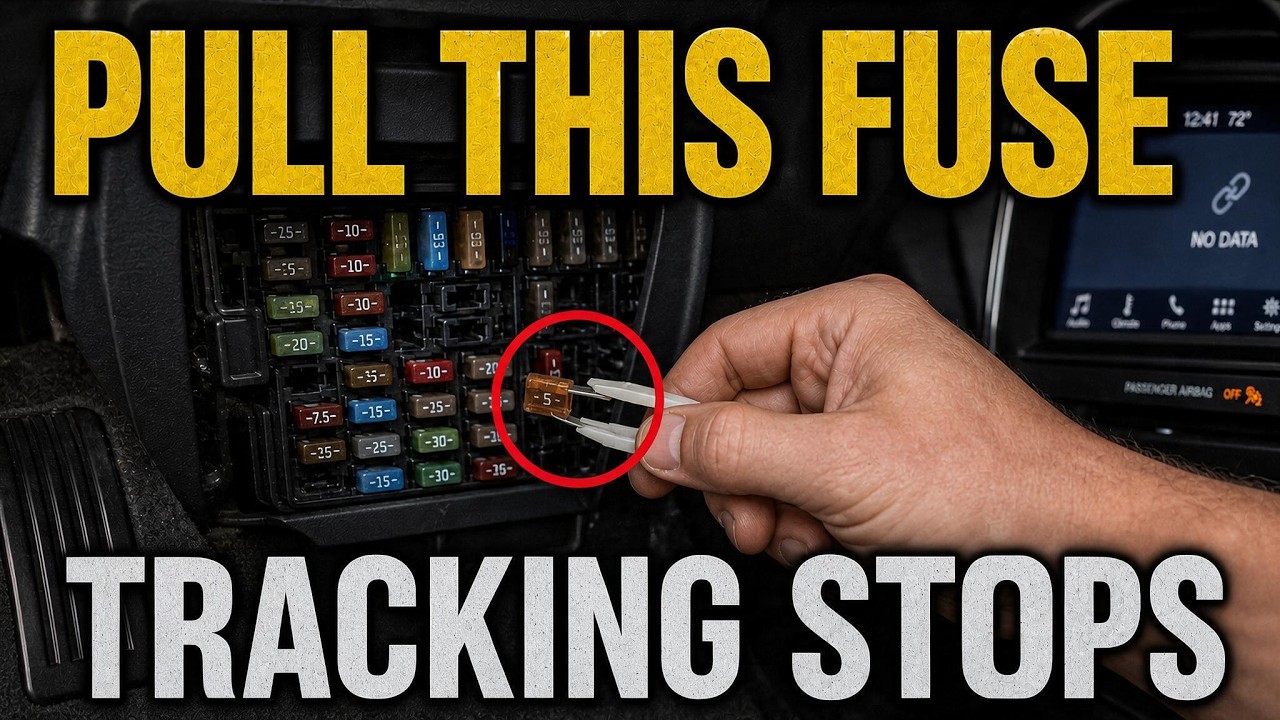
In the past, vehicle owners relied on simple fixes like pulling specific fuses to disable the onboard modem. However, modern automotive architecture has become increasingly integrated. In newer Ford models, pulling a fuse can accidentally disable critical non-tracking systems, such as Bluetooth connectivity, center-console displays, or essential driver assistance features.
The Updated Method to Take Control
To overcome these integration challenges, tech-savvy owners are adopting updated, targeted methods to permanently stop unwanted data sharing. Rather than relying on simple fuse-pulling, enthusiasts are opting for precise hardware disconnections—such as physically unplugging the Telematics Control Unit (TCU)—or using specialized software tools to reprogram the vehicle's computer modules directly.
These updated techniques allow owners to fully disable cellular transmission capabilities while keeping essential dashboard functions, offline navigation, and infotainment features completely intact.
Final Thoughts: Balancing Privacy and Convenience
The effort to disconnect smart SUVs highlights a growing demand for consumer data sovereignty on the open road. As connected car technology becomes the industry standard, learning how to manage or disable your vehicle's modem ensures you remain in complete control of your personal data.


