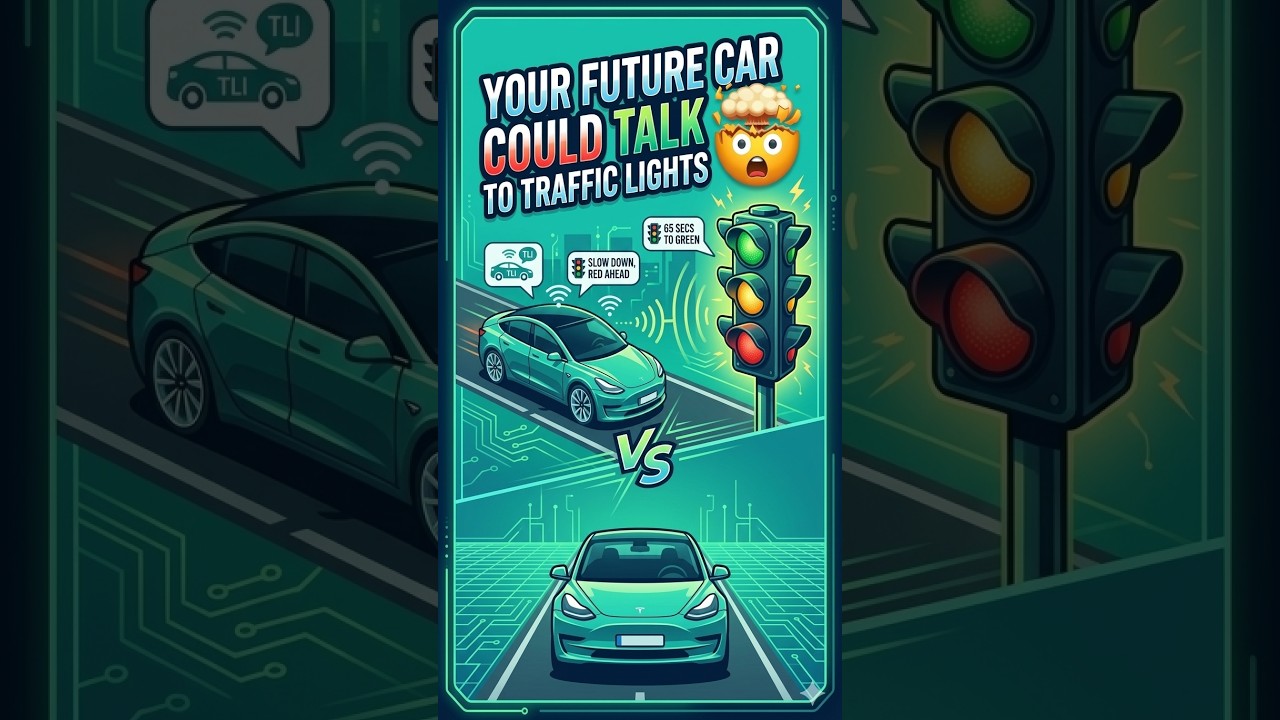
The Future of Driving: Why Your Next Connected car Will Talk to Traffic Lights
This article provides an in-depth exploration of Connected car, covering foundational concepts, practical applications, and engineering insights.
Have you ever sat at a red light in the middle of the night, staring at an empty intersection and wondering why you’re still stopped? That frustration may soon become a relic of the past. The automotive industry is undergoing a massive digital transformation, and at the heart of this revolution is the connected car. By integrating advanced AI and real-time data exchange, your future vehicle won’t just be a mode of transport—it will be an active participant in the city's digital ecosystem.
The Magic of V2I Communication
The technology making this possible is known as Vehicle-to-Infrastructure (V2I) communication. Instead of a driver simply reacting to what they see, a connected car can "talk" directly to the traffic signals ahead. Through high-speed wireless networks, the traffic light sends data about its timing cycles directly to your dashboard. This allows the car to suggest an optimal speed so you can hit every green light on your route, a concept often referred to as a "green wave."
Boosting Efficiency and Safety
This innovation isn't just a convenience; it’s a game-changer for the environment and urban safety. When cars and traffic lights are in constant sync, we see a drastic reduction in idling time. This leads to lower fuel consumption and a significant decrease in carbon emissions.
Furthermore, safety is vastly improved. If a traffic light is about to turn red and the onboard AI senses that the vehicle is approaching too quickly to stop safely, it can provide an immediate haptic or visual alert to the driver. In more advanced systems, the car could even begin pre-braking to prevent a potential intersection collision.
The Path to a Smarter City
As we move toward a world populated by autonomous vehicles, this level of connectivity becomes the essential backbone of urban mobility. Traffic jams are often caused by the "phantom brake" effect—human drivers reacting slowly to changes. With the connected car acting as a data node, traffic flow becomes a synchronized dance rather than a chaotic struggle.
We are entering an era where your car knows the road better than you do. By talking to the infrastructure, the future of driving promises to be faster, safer, and significantly more sustainable. The next time you’re stuck at a red light, just remember: your car might soon be the one to tell the light to turn green.
Visual Insights & Illustrations


