How Does a Car Actually Work? Demystifying Essential Vehicle Tech
This article provides an in-depth exploration of Vehicle tech, covering foundational concepts, practical applications, and engineering insights.
Have you ever wondered what actually happens under the hood when you step on the gas pedal? To most drivers, a automobile feels like a seamless machine, but it is actually a complex symphony of mechanical engineering and modern vehicle tech. From converting fuel into raw power to coming to a complete stop, every component plays a vital role in your daily drive. Let’s break down the essential systems that make your car move, turn, and stop safely.
The Engine: Converting Fuel into Motion
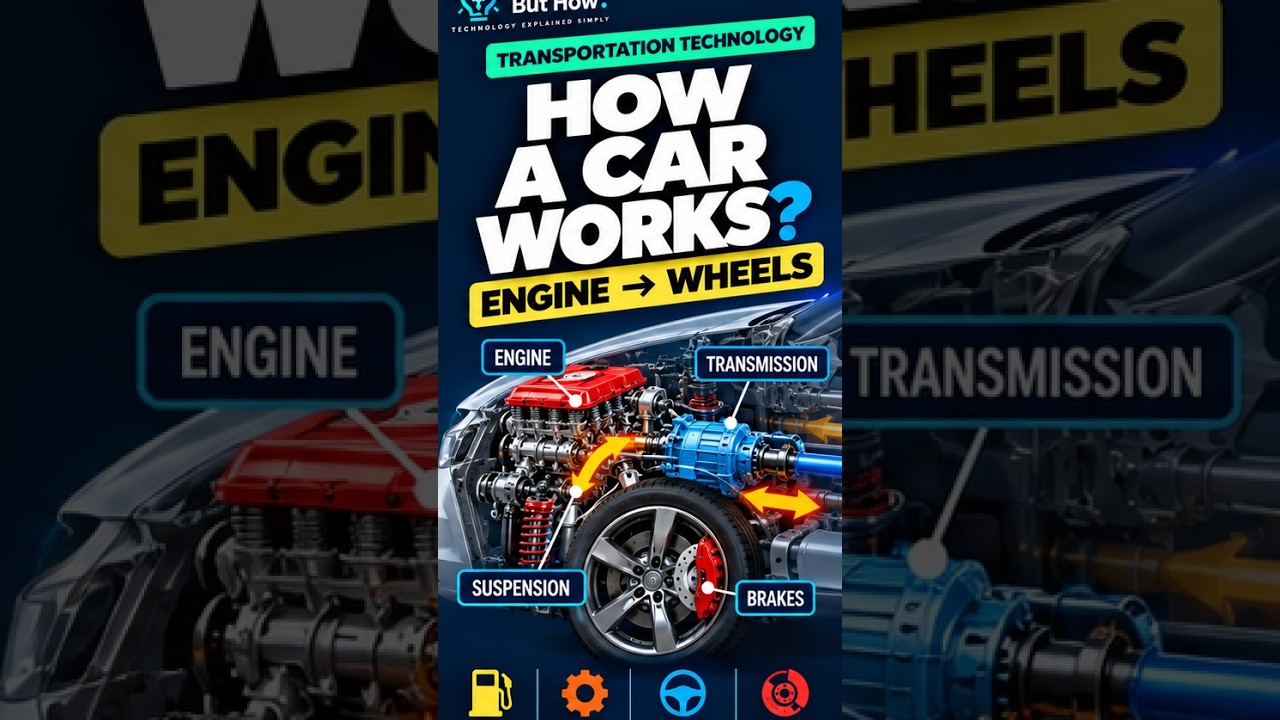
The engine is the heart of any automobile. In a traditional internal combustion engine, thousands of tiny controlled explosions happen every minute. Fuel mixes with air, ignites inside the cylinders, and pushes pistons downward. This linear up-and-down motion is converted into rotational force by the crankshaft. This rotational energy is the raw power that ultimately turns your wheels and propels you forward.
The Transmission and Steering: Speed and Control
Generating power from the engine is only half the battle; you also need to manage and direct it. That’s where the transmission comes in. By utilizing a series of gears, the transmission regulates the engine’s power output—delivering high torque at low speeds to get moving, and high efficiency at cruising speeds. Understanding gear ratios is an essential aspect of modern vehicle tech that keeps your engine running smoothly without overheating.
Simultaneously, when you turn the steering wheel, a system of gears (often assisted by hydraulic or electric power) translates that steering wheel rotation into side-to-side motion. This angles your front wheels, allowing you to navigate sharp corners effortlessly.
The Brakes: Stopping Safely
Bringing a two-ton vehicle to a complete halt requires tremendous force. The braking system relies on hydraulics to amplify the pressure from your foot on the pedal. Hydraulic fluid pushes brake pads against rotating metal discs (rotors) attached to the wheels. The resulting friction converts kinetic energy into heat, bringing the vehicle to a safe, controlled stop.
Conclusion
From the combustion chamber to the brake pads, mechanical engineering and advanced vehicle tech work in complete harmony every second you are on the road. Understanding these fundamentals not only gives you a deeper appreciation for your daily commute, but it also empowers you to spot potential maintenance issues before they become costly repairs.


