Self-driving cars are no longer a distant vision of the future—they are actively reshaping modern transportation. At the heart of this mobility revolution lies cutting-edge autonomous vehicle technology, which enables vehicles to sense their surroundings and navigate complex roads without human intervention. While sensors and cameras play crucial roles, a groundbreaking innovation is taking laser-based navigation to a whole new level: microscopic vibrating silicon mirrors capable of steering laser beams at the speed of light.
The Science Behind Microscopic Silicon Mirrors
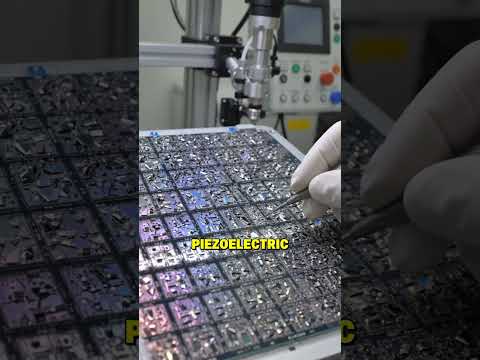
Traditional optical detection systems often rely on heavy, bulky rotating units to scan their surroundings. However, automotive engineers are increasingly shifting toward Micro-Electro-Mechanical Systems (MEMS). These microscopic silicon mirrors vibrate thousands of times per second, dynamically directing laser beams across a vast field of view. By reflecting light almost instantaneously, these micro-mirrors allow LiDAR (Light Detection and Ranging) systems to construct ultra-precise, three-dimensional digital maps of the environment in real time.
Enhancing Safety and Precision at Light Speed
In high-speed traffic, every millisecond matters. Steering laser beams at the speed of light ensures that an onboard computer receives immediate spatial feedback. Whether detecting an unexpected pedestrian, identifying sudden road obstacles, or executing complex highway lane changes, this lightning-fast laser steering provides unprecedented situational awareness. Furthermore, because microscopic silicon mirrors eliminate large mechanical moving parts, the entire system becomes smaller, far more reliable, and resistant to physical wear and vibration.
Driving the Future of Automated Mobility
As the automotive industry pushes toward higher levels of self-driving capability, continuous progress in autonomous vehicle technology is essential. Microscopic vibrating silicon mirrors provide a compact, durable, and cost-effective hardware solution that accelerates the path to mass-market adoption. By harnessing light-speed precision, next-generation self-driving systems can achieve superior safety and performance standards.
This remarkable innovation demonstrates how microscopic engineering can solve monumental real-world challenges, ultimately setting a new benchmark for the future of autonomous vehicle technology.