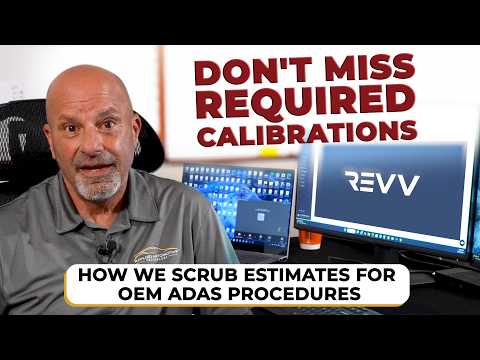
When a damaged vehicle enters a repair shop, a standard estimate rarely tells the full story. Modern vehicles rely heavily on Advanced Driver Assistance Systems (ADAS)—including lane assist, automatic braking, and blind-spot monitoring—that require precise recalibration after even minor bodywork or part replacements.
If you want to guarantee safety and compliance on every job, this ADAS calibration tutorial will show you how to utilize Revv to uncover hidden calibration requirements quickly and accurately.
Why Standard Repair Estimates Miss ADAS Requirements
Traditional repair estimates usually focus on obvious visual damage, mechanical fixes, and cosmetic paintwork. However, ADAS sensors, cameras, and radar units are frequently tucked away behind bumpers, mirrors, and windshields. Disconnecting a bumper or performing a wheel alignment can easily disrupt sensor positioning.
Relying solely on visual checks or basic scan tools often leads to missed steps. That is why implementing a structured ADAS calibration tutorial workflow is essential. Without detailed OEM insights, critical safety systems might remain uncalibrated when the vehicle leaves the shop.
How Revv Simplifies ADAS Identification
In the video, Mark walks through how software like Revv changes the game for automotive technicians. Revv automatically analyzes estimate data and cross-references it with original equipment manufacturer (OEM) standards to pinpoint required calibrations instantly.
Here is how Revv enhances your diagnostic procedure: - Estimate Scanning: The platform scans repair line items to flag components that directly affect ADAS functionality. - OEM Alignment: Instead of manually digging through repair manuals, technicians receive clear OEM recommendations regarding static or dynamic calibration needs. - Detailed Documentation: Revv generates clear reports that can be attached to customer files and insurance claims, proving that all necessary safety checks were performed.
Ensure Safe and Complete Repairs Every Time
Equipping your facility with intelligent diagnostic tools ensures that no safety feature is overlooked. As demonstrated in this ADAS calibration tutorial, using Revv streamlines your workflow, reduces manual research time, and guarantees that every repaired vehicle returns to the road in optimal, safe working condition.


