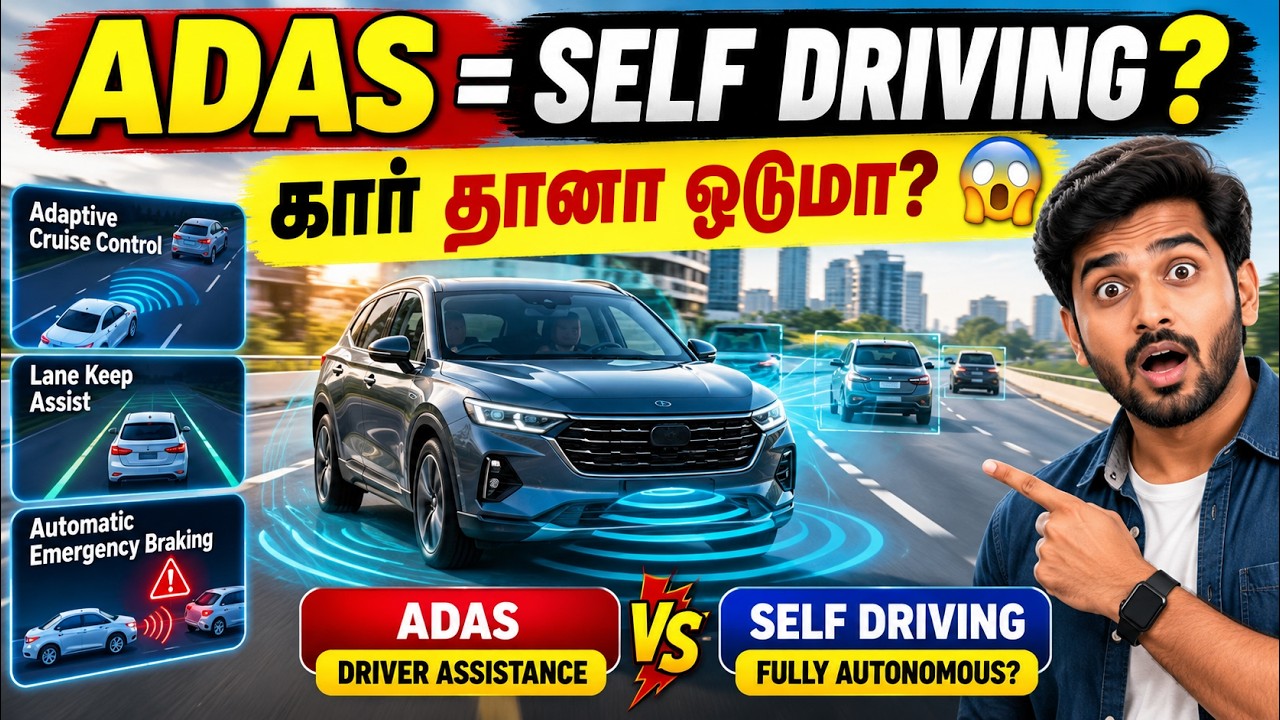
ADAS vs. Self-Driving Cars: Can Your Car Really Drive Itself?
This article provides an in-depth exploration of ADAS, covering foundational concepts, practical applications, and engineering insights.
Modern automotive technology is evolving rapidly, bringing features once reserved for science fiction directly into everyday vehicles. One of the most talked-about innovations in today's automotive market is ADAS (Advanced Driver Assistance Systems). However, a common misconception among car buyers is that having these smart features means the vehicle can fully drive itself. Can you actually take your hands off the steering wheel and let the car handle the drive? Let’s break down the truth behind this technology.
What is ADAS and How Does It Work?
Advanced Driver Assistance Systems are electronic safety features designed to assist drivers rather than replace them. Using a combination of camera sensors, radar, and intelligent software, these systems continuously monitor the vehicle's surroundings to help prevent accidents and lessen driver fatigue.
Key safety features commonly included in modern vehicles are:
* Adaptive Cruise Control: Automatically adjusts your speed to maintain a safe distance from the vehicle ahead.
* Lane Keep Assist: Gently steers the vehicle back into its lane if it detects unintentional drifting.
* Automatic Emergency Braking: Scans for hazards and applies the brakes if the driver fails to respond in time.
ADAS vs. Fully Autonomous Self-Driving Cars
To understand the difference between assist technology and autonomous driving, it helps to look at vehicle automation levels, which range from Level 0 (no automation) to Level 5 (full automation).
Most modern consumer vehicles equipped with ADAS fall under Level 1 or Level 2 autonomy. This means the technology provides driver support for steering, accelerating, or braking, but the human driver remains legally and operationally responsible for monitoring the road at all times.
In contrast, a true fully self-driving car operates at Level 4 or Level 5 autonomy. At this stage, the vehicle handles all driving tasks under all conditions without requiring human intervention. While full autonomy is being developed and tested worldwide, true self-driving cars are not yet standard for consumer purchase.
Can You Drive Hands-Free?
The short answer is no. Even with high-end safety suites enabled, removing your hands from the steering wheel is unsafe and violates traffic laws in most regions. Current safety technology is designed to act as a co-pilot during moments of distraction or unexpected road hazards—not to navigate complex city traffic independently.
The Bottom Line
While modern driver assistance tools make highway trips significantly safer and less stressful, they are built to support human intelligence, not replace it. To ensure maximum safety on the road, always keep your hands on the wheel, stay focused, and treat advanced car tech as an extra pair of eyes rather than a replacement driver.


