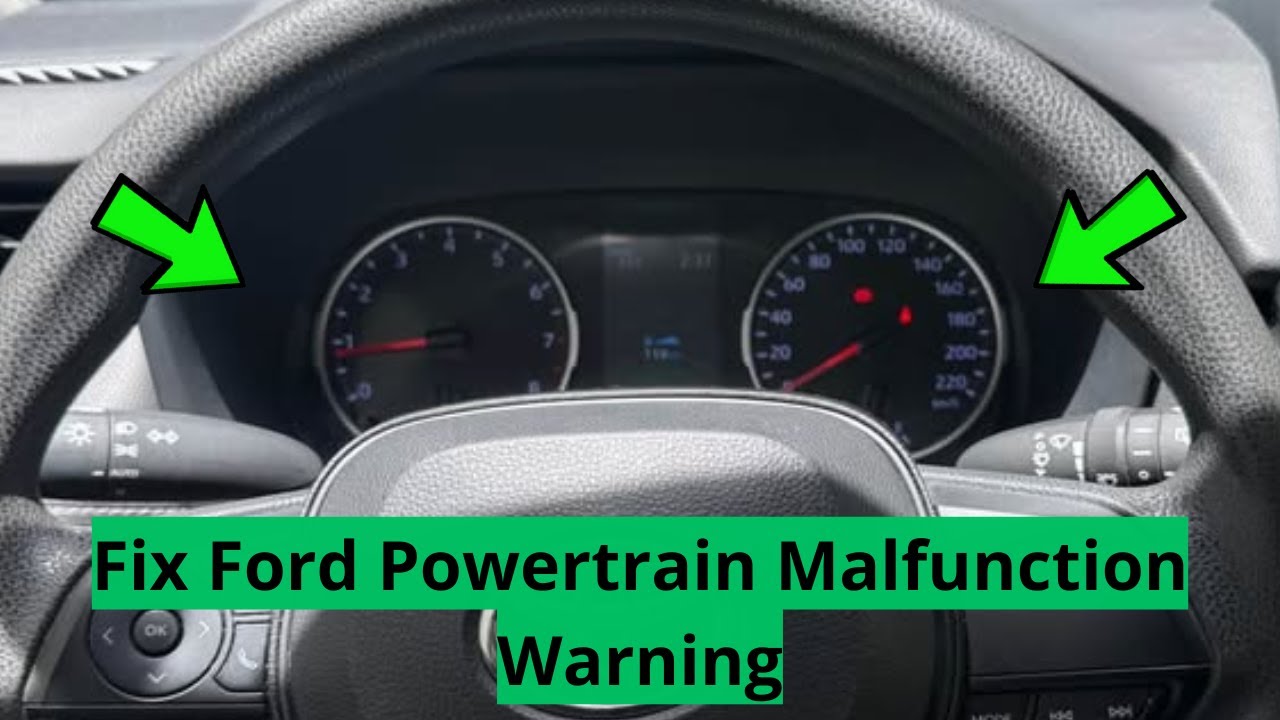
How to Fix the Ford Powertrain Malfunction Warning: A Quick Troubleshooting Guide
This article provides an in-depth exploration of Powertrain, covering foundational concepts, practical applications, and engineering insights.
Seeing a wrench icon illuminate on your dashboard can instantly trigger a wave of anxiety. If your Ford vehicle displays the dreaded "Powertrain Malfunction / Reduced Power" warning, you are not alone. This alert indicates that your vehicle's onboard computer has detected an issue with the system responsible for propelling your car forward.
Understanding what this warning means and knowing how to address it quickly can save you from costly repairs and keep you safe on the road.
What Triggers the Warning Light?
The powertrain encompasses all the vital components that generate power and deliver it to the wheels, including the engine, transmission, driveshaft, and differential. When the control module detects an anomaly in any of these interconnected systems, it triggers the warning light and often puts the vehicle into "limp mode" to prevent catastrophic damage.
Common culprits behind this issue include:
- Electronic Throttle Body Faults: Sticky or failing throttle bodies are very common in modern Ford models.
- Sensor Failures: Malfunctioning mass air flow (MAF), oxygen, or transmission position sensors.
- Transmission Issues: Low transmission fluid, slipping gears, or overheating components.
- Electrical Voltage Drops: Loose battery terminals, corroded wiring, or a weak battery affecting control module communication.
Step-by-Step Troubleshooting and Fixes
- Perform a Hard Reset: Pull over safely, turn off the engine, and wait 3 to 5 minutes. Restarting the vehicle allows the computer modules to reboot, which may temporarily clear minor electronic glitches.
- Use an OBD-II Scanner: Plug a code reader into the port beneath your steering wheel. Reading the diagnostic trouble codes (DTCs) will pinpoint the exact component causing the fault.
- Inspect the Throttle Body and Battery: Check for loose or corroded battery terminals, as low voltage frequently triggers false error codes. If the error points to the throttle body, cleaning out carbon deposits with a specialized cleaner may resolve the problem.
- Check Transmission Fluid: Ensure your transmission fluid is topped off and clean. Low fluid levels can disrupt gear shifting and trigger protective warning modes.
Final Thoughts
While minor software bugs can occasionally be cleared with a quick restart, persistent warning lights should never be ignored. Keeping your vehicle's powertrain properly maintained is essential for smooth performance and driving safety. If diagnostic codes indicate a severe transmission or engine fault, consult a certified mechanic immediately to perform a proper repair.


