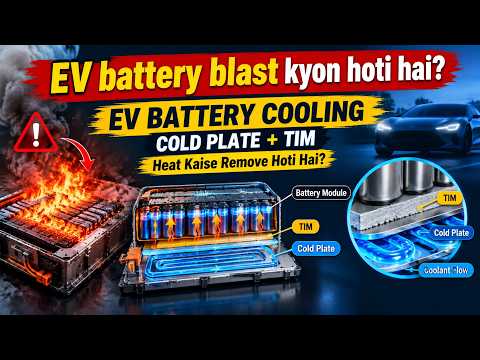
Electric vehicles (EVs) rely heavily on high-density lithium-ion battery packs to power modern transportation. However, whether you are fast-charging or driving at highway speeds, battery operation generates a significant amount of heat. If this heat is not dissipated effectively, performance degrades, battery life drops, and vehicle safety can be compromised. This is precisely where the EV thermal management concept becomes essential to ensure battery packs operate within their ideal temperature window.
The Key Components: Cold Plates and TIM
To manage heat effectively, modern Battery Thermal Management Systems (BTMS) rely on a combination of advanced hardware and materials. Two of the most critical elements in this setup are Cold Plates and Thermal Interface Materials (TIM).
- Cold Plates: These are specially designed metal plates featuring intricate internal channels through which a liquid coolant flows. Positioned directly against or between battery modules, cold plates absorb excess heat generated by the cells and carry it away to a heat exchanger or radiator.
- Thermal Interface Materials (TIM): Even finely machined metal surfaces have microscopic air gaps that can trap heat and act as thermal insulators. TIM—available as thermal pads, pastes, or gap fillers—is applied between the battery cells and the cold plate to eliminate these air gaps, creating a seamless path for heat conductivity.
Why the EV Thermal Management Concept is Vital for Safety and Range
Implementing an effective EV thermal management concept is about far more than preventing overheating; it directly impacts overall vehicle usability, driving range, and safety.
Without active cooling, uneven temperature distribution across cells can lead to premature cell degradation, reduced energy efficiency, and lower driving range. In extreme situations, unmanaged heat can cause thermal runaway—a dangerous chain reaction leading to severe battery fires. By maintaining uniform temperatures across every single cell, advanced thermal management systems protect battery health, unlock faster DC rapid-charging times, and maintain peak performance in both hot and freezing climates.
Final Thoughts
As electric mobility advances, thermal management systems are becoming lighter, more compact, and increasingly efficient. Understanding the EV thermal management concept helps us appreciate the intricate engineering that keeps modern electric cars safe, reliable, and capable of long-distance driving.


