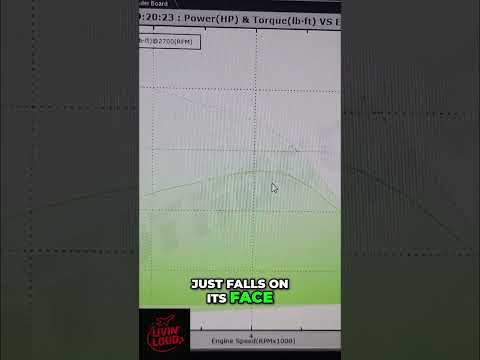
There is nothing more frustrating for an automotive enthusiast or tuner than watching a high-performance build hit the dynamometer, only to see the power curve suddenly plummet. When an engine suffers a sharp drop-off past 3000 RPM, it signals a critical underlying issue that demands immediate attention. In these high-stakes scenarios, a detailed engine performance analysis becomes essential to diagnose why the engine is choking under load.
Why Does Power Drop Past 3000 RPM?
When an engine loses torque early in its rev range, several mechanical and electronic factors could be at play. A severe loss of power past the 3000 RPM mark typically points to one of the following culprits:
- Fuel Delivery Deficiencies: Inadequate fuel pump flow, clogged injectors, or lean air-fuel ratios that fail under higher engine demand.
- Ignition Timing & Spark Blowout: Failing spark plugs or improper ignition timing advance commanded by the ECU.
- Intake and Exhaust Restrictions: A collapsed intake hose, clogged catalytic converter, or failing turbocharger failing to maintain airflow.
- Valve Float: Weak valve springs unable to control valve movement at higher RPMs.
The Role of Dyno Data in Troubleshooting
A dynamometer does far more than just measure peak horsepower; it provides a complete visual map of how an engine behaves under load. Through comprehensive engine performance analysis, technicians can overlay expected torque output curves against actual real-time dyno telemetry.
By comparing parameters like manifold absolute pressure (MAP), air-fuel ratio (AFR), and knock sensor activity directly against the horsepower drop, you can pinpoint the exact moment the anomaly occurs. For instance, if power plunges right as the air-fuel mixture spikes lean, fuel starvation is almost certainly the issue.
Restoring Peak Engine Output
Fixing an erratic power curve requires a structured troubleshooting process:
- Live Data Logging: Track real-time sensor data during dyno pulls to observe ECU corrections.
- Physical Inspection: Perform smoke tests for intake leaks, check spark plug gaps, and measure fuel pressure.
- ECU Re-Calibration: Fine-tune fuel maps and ignition curves to smooth out power delivery.
Whether you are tuning a dedicated race car or restoring a street machine, utilizing reliable engine performance analysis is the best way to reclaim lost power and protect your engine from costly damage. Don't let a failed dyno run end your build—analyze the data, clear the bottleneck, and unleash your engine's true potential.


