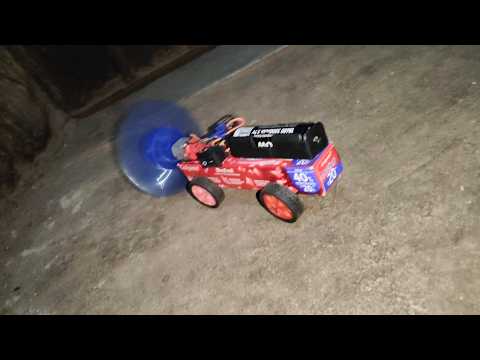
Are you looking for an exciting, hands-on way to explore basic physics and mechanical engineering at home? Building a DIY fan car is one of the most accessible and educational automotive project examples you can try. Whether you are a student preparing for a school science fair or a hobbyist eager to learn how thrust propulsion works, this simple mini-car project is a fantastic starting point.
What Is a DIY Fan Car?
Unlike traditional toy cars that rely on gears attached directly to the wheels for drive power, a fan car moves using air propulsion. A small DC motor spins a propeller mounted on top of the chassis, generating forward thrust that pushes the vehicle across flat surfaces. This simple mechanism provides a clear, practical demonstration of Newton’s Third Law of Motion: for every action, there is an equal and opposite reaction.
Essential Materials Needed
To build your own mini fan car, you only need a few inexpensive craft supplies and basic electronic components:
- A lightweight chassis base (such as sturdy cardboard or craft sticks)
- Four lightweight toy wheels and two thin axles
- A small 3V–9V DC motor with a plastic propeller
- A compatible battery pack (AA or 9V) and connecting wires
- Hot glue and scissors
Step-by-Step Assembly Guide
- Construct the Frame: Cut a lightweight rectangular piece of cardboard to serve as your vehicle chassis. Mount the wheel axles underneath using hot glue, ensuring the wheels rotate freely.
- Install the Motor and Propeller: Securely glue the DC motor to the rear top side of the chassis. Attach the plastic propeller firmly onto the motor shaft, double-checking that it has enough clearance to spin without hitting the base.
- Connect the Electrical Circuit: Wire the battery pack directly to the motor terminals. If the propeller blows air forward instead of backward, simply reverse the wire connections to change the motor's spinning direction.
- Test Drive: Flip the power switch, place your vehicle on a smooth floor, and watch your DIY creation zoom across the room!
Learn Through Practical STEM Projects
Exploring creative automotive project examples like this fan car bridges the gap between theoretical science and hands-on application. By adjusting the weight of the frame, swapping propellers, or changing the battery voltage, you can experiment with aerodynamics, friction, and circuit design. Give this fun DIY project a try today to unlock your inner engineer!


