As automotive technology evolves, vehicles are transforming from simple mechanical transport into sophisticated computers on wheels. At the center of this revolution is the modern connected car, which relies heavily on cellular networks like LTE to enable over-the-air updates, real-time navigation, remote diagnostics, and infotainment services. While these features offer unprecedented convenience, they also introduce critical cybersecurity challenges.
Analyzing Cellular Connectivity in Smart Vehicles
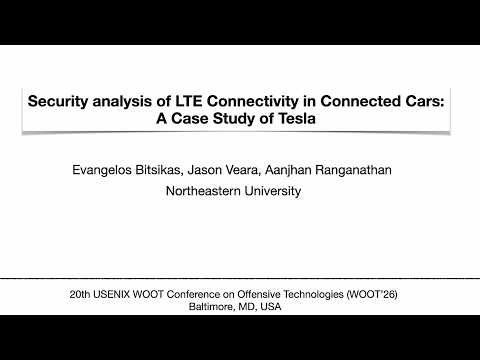
Recent security research presented at WOOT '26 by Evangelos Bitsikas, Jason Veara, and Aanjhan Ranganathan dives deep into how LTE connectivity functions within modern smart vehicles, using Tesla as a primary case study. Because smart vehicles depend on persistent cellular connections to communicate with cloud infrastructure, any flaw in the underlying telecommunications protocols or vehicle telematics can expose sensitive user data or even operational functions.
The study highlights how vulnerabilities in LTE network implementations and cellular traffic handling can be exploited by malicious actors. By intercepting or spoofing cellular communication channels, attackers could potentially track vehicle locations, intercept telematics data, or interfere with remote management features. This research underscores that securing a connected car requires looking far beyond local wireless interfaces like Bluetooth and Wi-Fi; cellular architecture must be thoroughly audited as well.
Key Takeaways for Automotive Cybersecurity
As the automotive industry pushes closer to full autonomy, protecting vehicular communication systems becomes a matter of public safety. Automotive manufacturers and network providers must adopt a defense-in-depth approach to secure cellular networks against modern threats. Essential measures include:
- End-to-End Encryption: Ensuring all telematics, control signals, and diagnostic data transmitted over cellular networks are fully encrypted and authenticated.
- Cellular Protocol Hardening: Implementing strict verification mechanisms to defend against rogue base stations and signal spoofing attacks.
- Continuous Vulnerability Assessment: Regularly auditing cellular modems, telematics control units (TCUs), and over-the-air update mechanisms.
In conclusion, while the connected car represents the exciting future of personal mobility, cybersecurity must remain at the forefront of automotive innovation. Robust cellular security protocols and ongoing vulnerability research are essential to safeguard driver privacy and maintain trust in the smart vehicles of tomorrow.


