Powering the EV Revolution: How MOSFETs Transform Electric Vehicle Tech
This article provides an in-depth exploration of Vehicle tech, covering foundational concepts, practical applications, and engineering insights.
Electric vehicles (EVs) are no longer just the future—they are actively reshaping the modern transportation landscape today. While sleek aerodynamic designs and massive digital dashboards often grab headlines, the true magic happens behind the scenes in the drivetrain. At the core of modern vehicle tech lies a crucial, highly efficient semiconductor component: the MOSFET.
What Is a MOSFET?
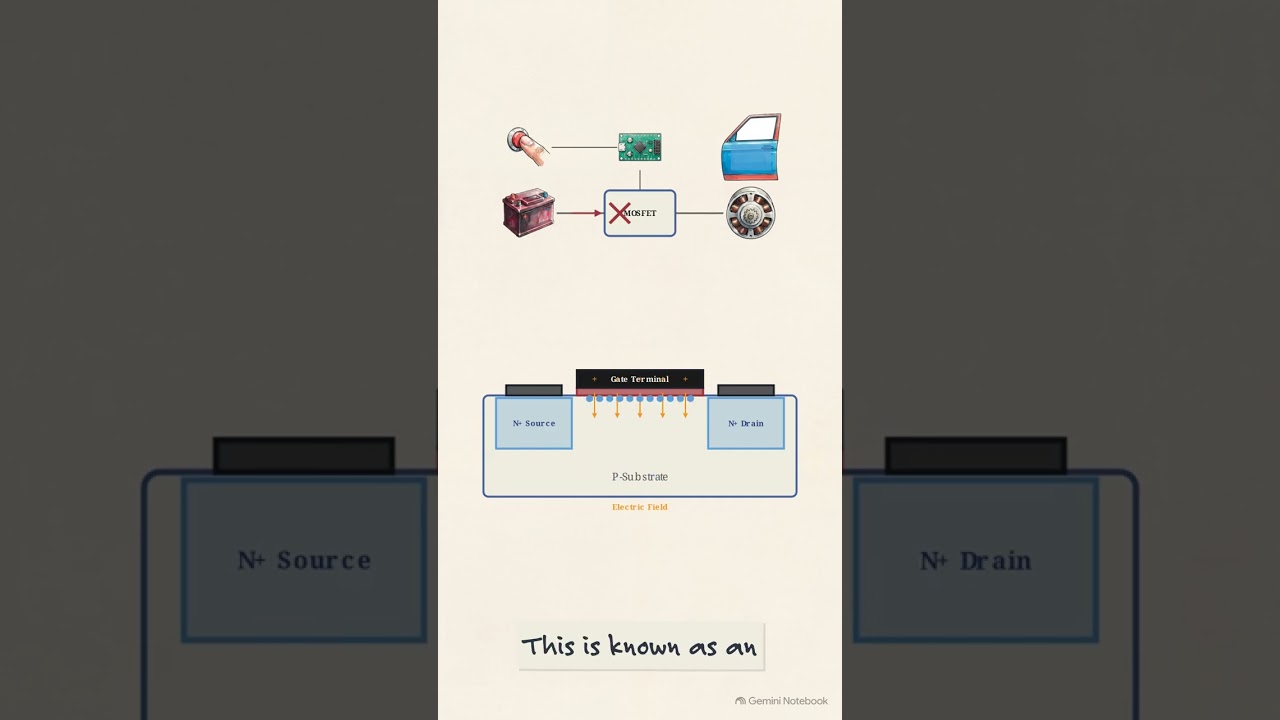
MOSFET stands for Metal-Oxide-Semiconductor Field-Effect Transistor. In basic terms, it functions as an electronic switch capable of turning massive electrical currents on and off at mind-boggling speeds. Unlike traditional mechanical relays that wear out over time, MOSFETs are solid-state devices with no moving parts. This makes them extraordinarily durable, hyper-efficient, and capable of managing the intense power demands of an electric car motor.
Controlling Electric Motors with Speed and Precision
How does a tiny semiconductor switch control a high-powered electric motor? The secret lies in dynamic power regulation. Electric car motors do not receive a constant, blunt stream of electricity; instead, they require precise control to manage acceleration, cruising, and regenerative braking.
MOSFETs achieve this by rapidly pulsing electricity to the motor thousands of times per second—a technique called Pulse Width Modulation (PWM). By finely tuning the duration of these electrical pulses, the EV's motor controller smoothly regulates speed and torque without wasting precious battery power as heat. This rapid switching allows drivers to experience instant throttle response and effortless power delivery.
The Impact on Future Transportation
As battery ranges expand and power demands grow, efficient switching hardware remains essential to advancing modern vehicle tech. Innovations in wide-bandgap semiconductors, such as Silicon Carbide (SiC) MOSFETs, now allow these switches to operate at even higher voltages and temperatures with minimal power loss.
Ultimately, these silicon powerhouses bridge the gap between delicate computer logic and massive mechanical output. By maximizing energy efficiency and reliability, MOSFETs are helping drive the next generation of cleaner, smarter vehicle tech.


