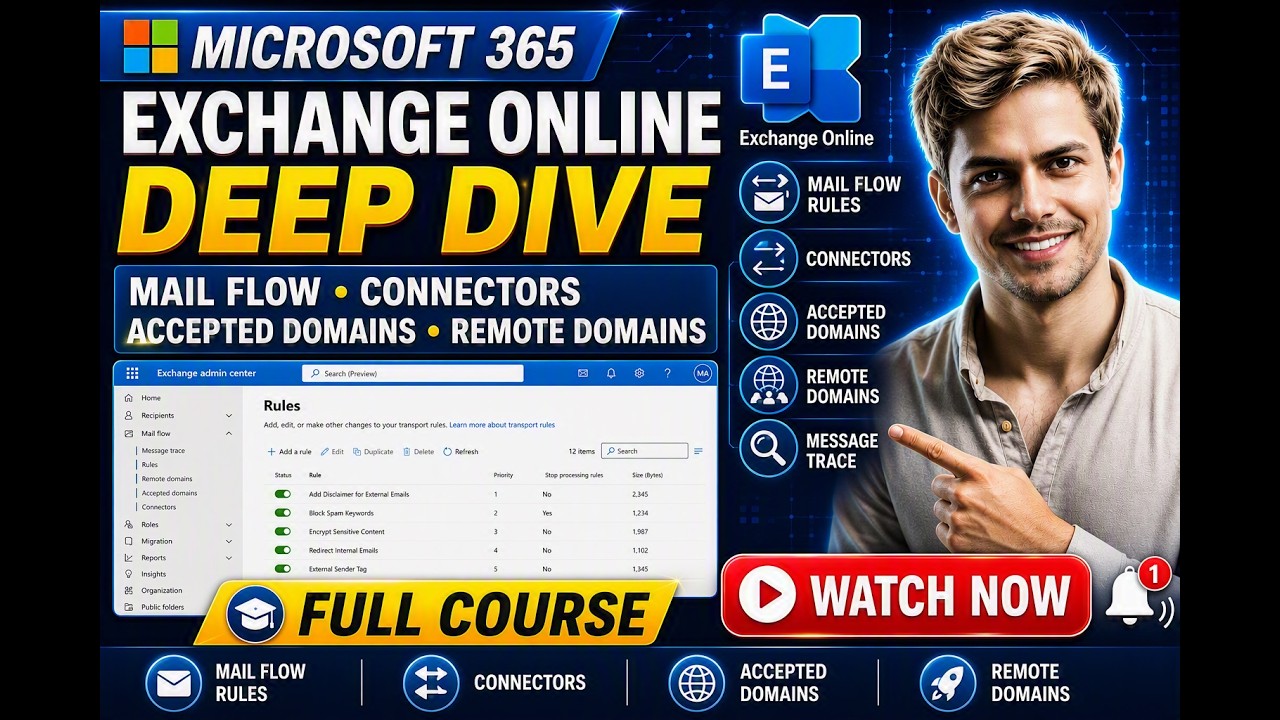
Mastering Exchange Online Mail Flow: The Essential Guide for Your Hybrid Drive
This article provides an in-depth exploration of Hybrid drive, covering foundational concepts, practical applications, and engineering insights.
In the modern enterprise landscape, ensuring that emails reach their destination securely and efficiently is the backbone of business communication. As organizations migrate to the cloud, understanding the intricacies of Exchange Online is no longer optional—it is a necessity. This deep dive into mail flow explores how Microsoft 365 manages the journey of an email from the moment it is sent until it hits the recipient's inbox.
The Momentum of the Hybrid Drive
Many organizations today are not moving to the cloud overnight; instead, they are maintaining a foot in both worlds. This hybrid drive toward a balanced infrastructure requires a sophisticated understanding of how mail moves between on-premises servers and Exchange Online. Mastering these configurations ensures that your organization maintains high availability and security during the transition.
Core Components: Accepted and Remote Domains
Before a single message can be routed, you must configure your domains. Accepted Domains are the SMTP namespaces for which your Exchange organization sends or receives email. These can be "Authoritative" (where Exchange hosts all mailboxes) or "Internal Relay" (where some mailboxes are on-premises). Conversely, Remote Domains allow you to define settings for message delivery to external domains, controlling aspects like out-of-office replies and automatic forwarding.
Connectors: The Bridges of Communication
Connectors are the primary mechanism for controlling the path your email takes. Whether you are connecting to a partner organization or linking your cloud environment back to a legacy server, connectors act as the secure bridges. In a complex hybrid drive setup, inbound and outbound connectors ensure that mail is encrypted and routed through the correct smart hosts, preventing delivery failures and ensuring compliance with industry standards.
Mail Flow Rules: The Traffic Controllers
Often referred to as Transport Rules, Mail Flow Rules are the "brain" of your email infrastructure. These rules allow administrators to inspect messages in transit and take action based on specific criteria. From adding legal disclaimers and blocking sensitive data leaks to bypassing spam filters for trusted partners, these rules provide the granular control needed to manage a modern workforce.
Ensuring Peak Performance
A successful hybrid drive to the cloud relies on visibility. By utilizing the message trace tools and mail flow dashboards within the Exchange Admin Center, administrators can troubleshoot delivery delays and identify bottlenecks in real-time. By mastering these pillars—domains, connectors, and rules—you ensure that your organization’s communication remains seamless, secure, and professional.
Visual Insights & Illustrations


