Electric vehicles are rapidly changing the way we travel, offering a cleaner, quieter, and more efficient alternative to traditional gas-powered cars. But have you ever wondered what actually happens under the hood? While internal combustion engines rely on hundreds of moving parts, modern EV tech simplifies the driving experience through brilliant electrical engineering.
Let's break down the fundamental components and smart systems that power today's electric cars.
The Core Components of an Electric Vehicle
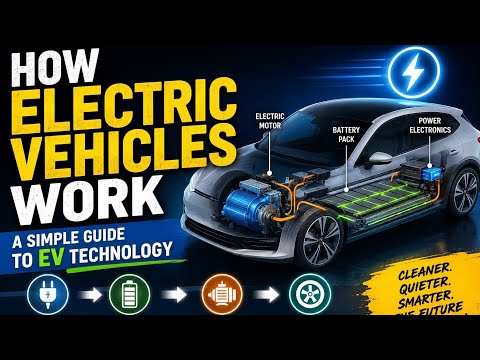
Unlike conventional cars that burn gasoline to create kinetic energy, an electric vehicle relies on a streamlined ecosystem of three main components:
- The Battery Pack: Acting as the car's fuel tank, the lithium-ion battery pack stores electrical energy. Usually installed along the floor of the vehicle, it creates a low center of gravity that significantly improves safety and handling.
- The Power Inverter: Batteries store power as Direct Current (DC), but electric motors require Alternating Current (AC). The inverter converts DC to AC and regulates the flow of power to control your speed based on accelerator input.
- The Electric Motor: Replacing the traditional engine, the motor converts electrical energy into instant mechanical torque, driving the wheels without the need for a complex, multi-gear transmission.
Regenerative Braking: Smart Energy Recovery
One of the stand-out achievements of modern EV tech is regenerative braking. When you lift your foot off the accelerator or apply the brakes, the electric motor reverses its function. Instead of drawing power from the battery, it acts as a generator, capturing kinetic energy from the slowing vehicle and converting it back into electricity to top up the battery. This process boosts efficiency and dramatically reduces wear on traditional brake pads.
The Future of Electric Transportation
Without spark plugs, timing belts, or oil filters, electric vehicles require far less routine maintenance than their internal combustion counterparts. As EV tech continues to advance, driving range is increasing, charging speeds are accelerating, and battery costs are coming down. Understanding these core technologies reveals why the shift toward an electric future is moving faster than ever.


