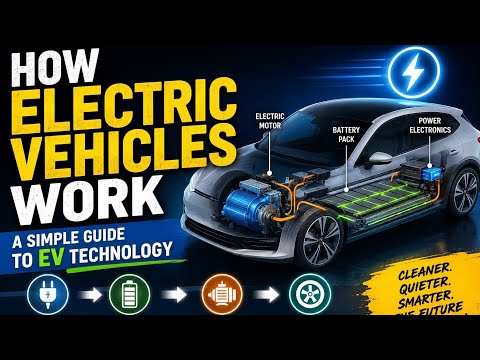
Electric vehicles are rapidly transforming the future of transportation. While traditional gas-powered cars rely on complex internal combustion engines, modern EV tech takes a much cleaner, quieter, and more efficient approach. If you’ve ever wondered what actually happens beneath the floorboards of an electric car, this simple breakdown explains the core mechanics behind zero-emission driving.
The Core Components of an Electric Car
At its heart, an electric vehicle replaces fuel tanks and spark plugs with a streamlined electrical system. The main components include:
- The Lithium-Ion Battery Pack: Serving as the vehicle's power bank, the battery stores energy in Direct Current (DC) form.
- The Electric Motor: Replacing the traditional engine, the motor converts electrical energy into mechanical energy to turn the wheels.
- The Power Electronics Controller (Inverter): This unit manages the flow of electrical energy. It converts the battery's DC power into Alternating Current (AC) for the motor and regulates speed based on driver input.
How Power Flows from Battery to Wheels
When you press the accelerator, the vehicle's controller signals the battery to release stored electrical energy. The inverter adjusts the frequency and voltage sent to the electric motor, determining how fast the car accelerates.
Because electric motors deliver instant torque from a standstill, EVs do not require traditional multi-speed transmissions. This simple drivetrain setup reduces energy loss, provides seamless acceleration, and drastically lowers routine maintenance costs.
Regenerative Braking: Maximizing Efficiency
One of the most impressive innovations in current EV tech is regenerative braking. In a conventional car, slowing down converts kinetic energy into wasted heat through friction brakes. In an electric car, releasing the accelerator reverses the electric motor's function, turning it into a generator. As the vehicle slows down, it captures that kinetic energy and feeds electricity back into the battery, extending your driving range.
The Future of Transportation
Understanding EV tech doesn't require an engineering degree. By pairing high-capacity batteries with simple, highly efficient electric motors, electric vehicles offer a powerful, lower-maintenance alternative to traditional driving. As technology continues to evolve, EVs will only become faster to charge, longer-lasting, and more accessible to drivers worldwide.


