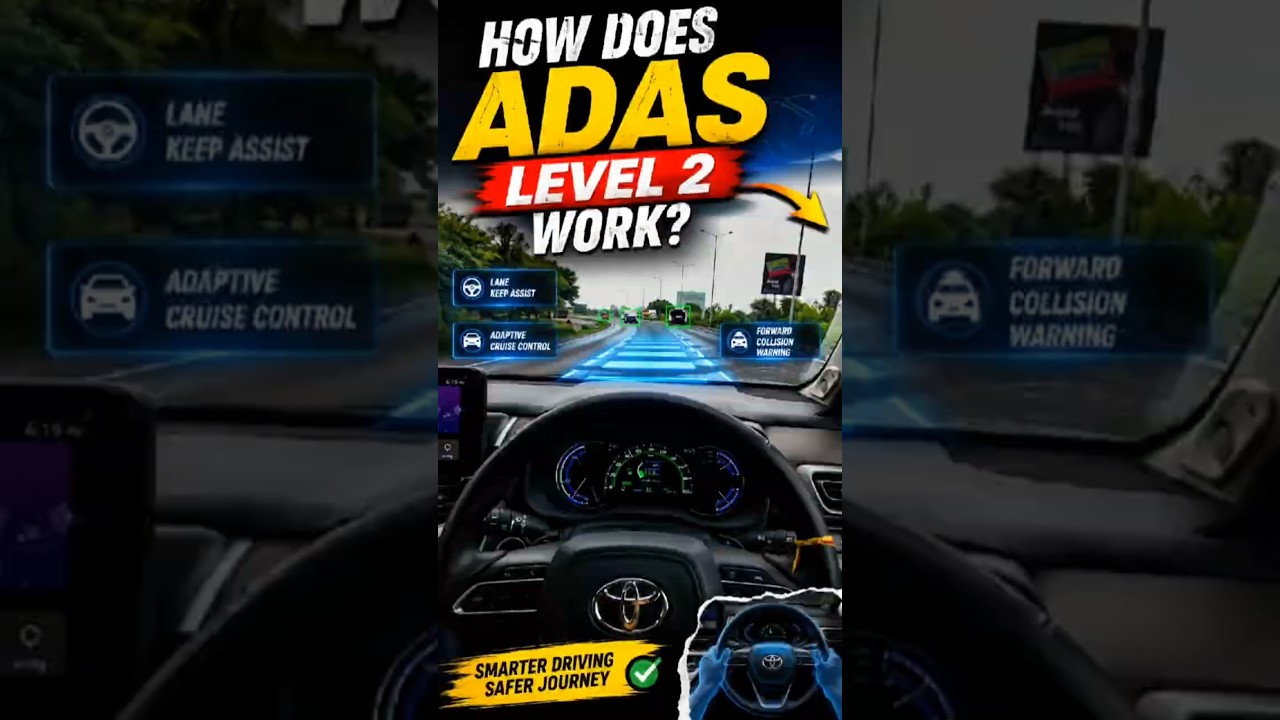
How Level 2 ADAS Works: The Smart Technology Behind Modern Driving
This article provides an in-depth exploration of ADAS, covering foundational concepts, practical applications, and engineering insights.
Modern vehicles are smarter and safer than ever before, bridging the gap between traditional manual driving and full autonomy. At the heart of this automotive evolution is ADAS (Advanced Driver Assistance Systems). While driver assistance comes in various stages, Level 2 automation has quickly become the benchmark for mainstream modern vehicles, from premium SUVs to popular models like the Kia Seltos.
Here is a closer look at what Level 2 driving assistance is and how it works in real-time.
What is Level 2 Automation?
According to automotive engineering standards, Level 2 represents "partial driving automation." Unlike basic Level 1 systems that manage only one function (such as standard cruise control), a Level 2 system can simultaneously control both steering and acceleration/braking under specific conditions.
How the Technology Operates
Level 2 systems rely on a sophisticated network of sensors, cameras, and onboard computers that continuously monitor the vehicle’s surroundings:
- Environmental Sensing: High-resolution cameras and radar sensors mounted around the vehicle scan for road markings, obstacles, and nearby traffic.
- Data Processing: An electronic control unit (ECU) processes sensor data instantly to predict movements and calculate safe distances.
- Active Intervention: The system activates actuators to steer the vehicle within lane boundaries or apply braking to maintain a safe following distance.
When combined, features like Adaptive Cruise Control (ACC) and Lane Keeping Assist (LKA) create a seamless, semi-automated highway driving experience.
Key Features of Level 2 Systems
- Adaptive Cruise Control with Stop & Go: Automatically adjusts vehicle speed to match traffic flow, coming to a complete stop if necessary.
- Lane Centering Assist: Actively steers the vehicle to stay centered in its lane, rather than just bouncing off lane lines.
- Autonomous Emergency Braking (AEB): Detects sudden hazards ahead and applies emergency braking if the driver fails to react in time.
The Driver’s Role: Supervision is Essential
It is vital to understand that a Level 2 ADAS is designed to assist the driver, not replace them. The human driver remains legally responsible for the vehicle at all times and must keep their hands on the wheel and eyes on the road. Most systems feature capacitive steering sensors or eye-tracking cameras to ensure the driver stays attentive.
Summary
Level 2 ADAS marks a major leap forward in road safety and comfort, significantly reducing driver fatigue on long journeys and minimizing human error in daily commutes. As technology continues to evolve, these smart features are setting the stage for the future of self-driving mobility.


