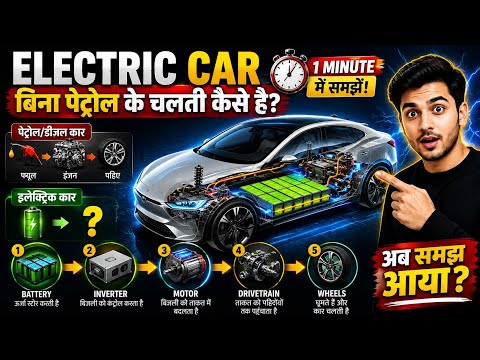
Have you ever wondered how an electric car glides down the street seamlessly without a single drop of petrol or diesel? For over a century, traditional internal combustion engine (ICE) vehicles have relied on fossil fuels and controlled mini-explosions to generate driving power. Today, cutting-edge EV tech is completely revolutionizing the way we think about personal transportation.
The Heart of the Vehicle: Battery Packs and Electric Motors
At the core of every electric car is a high-capacity rechargeable battery pack, typically made of lithium-ion cells and safely mounted beneath the vehicle's floorboards. When you charge an electric car, energy from the power grid is stored inside this central battery pack.
When you step on the accelerator pedal, a sophisticated power electronics module (or inverter) draws direct current (DC) from the battery pack and converts it into alternating current (AC). This electrical energy is sent directly to an electric motor. The motor uses electromagnetic fields to rotate an internal shaft, which instantly turns the car's wheels to drive you forward.
Why Modern EV Tech Is Superior to Gas Engines
One of the greatest advantages of modern EV tech lies in its mechanical simplicity and overall efficiency:
- Instant Torque: Unlike gas-powered cars that need to rev up to reach maximum power, electric motors deliver 100% of their available torque instantly, providing whisper-quiet and rapid acceleration.
- Fewer Moving Parts: Traditional engines contain thousands of moving parts—including spark plugs, pistons, valves, and exhaust systems—that wear down over time. Electric powertrains have significantly fewer components, resulting in lower long-term maintenance costs.
- Regenerative Braking: When you slow down in an electric vehicle, the motor runs in reverse and acts as a generator. It captures kinetic energy that would otherwise be lost as brake heat and feeds it back into the battery to extend your driving range.
The Future of Clean Mobility
Transitioning away from fossil fuels isn't just about changing fuel types; it is a fundamental shift toward sustainable living. As battery chemistry improves and rapid-charging infrastructure grows worldwide, advanced EV tech is making eco-friendly driving more accessible, efficient, and reliable than ever before.


