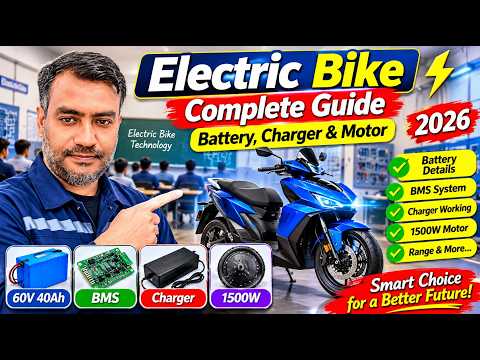
The electric bike (e-bike) revolution is moving at a breakneck pace. As we look toward the models of 2026, the technology under the hood has evolved from simple motorized assistance to complex, integrated power systems. Whether you are a commuter, a mountain biker, or a tech enthusiast, understanding how the motor, battery, and controller work together is essential to maximizing your ride's performance and lifespan.
The Powerhouse: High-Performance Motors and Batteries
The 2026 generation of e-bikes focuses on efficiency and torque density. Modern motors are becoming smaller yet more powerful, providing a seamless transition between human pedaling and electric assistance. However, a motor is only as good as the energy source feeding it. Today’s lithium-ion batteries are reaching new heights in energy density, allowing for longer ranges without adding excessive weight to the frame.
The Brain: Why Battery Management System Education is Crucial
While the motor provides the muscle, the Battery Management System (BMS) acts as the brain of the entire operation. This is perhaps the most critical component for safety and longevity. For those seeking comprehensive battery management system education, it is important to understand that the BMS is responsible for cell balancing, overcharge protection, and thermal management.
Without a sophisticated BMS, an e-bike battery would be prone to premature degradation or even hazardous overheating. By monitoring the voltage and temperature of each individual cell, the system ensures that the battery operates within its "sweet spot," significantly extending the number of charge cycles you can get out of your investment.
The Controller: The Master Communicator
If the battery is the heart and the BMS is the brain, the controller is the nervous system. It interprets the input from your throttle or pedal-assist sensor and tells the motor exactly how much power to pull from the battery. In 2026 models, controllers are becoming more "intelligent," using AI-driven algorithms to optimize power delivery based on terrain and rider behavior.
Conclusion: Empowering the Rider
As e-bike technology becomes more sophisticated, the value of battery management system education cannot be overstated. Understanding how these components—the motor, the battery, the BMS, and the controller—interact allows riders to make informed decisions about maintenance and upgrades. By staying informed about the technical documentaries and guides available today, you ensure that your ride into 2026 and beyond is safe, efficient, and exhilarating.


